Korean Festival Food Prices: How to Eat Without Overpaying
One Korean festival went from a ₩40,000 plate of pork to every dish under ₩10,000 in a year. How festival food pricing works now and what to check.

The short answer
Korean festival food is fairer than it was, because the worst cases became national news. Look for a posted price with a portion size, prefer festivals that publish menus in advance, and photograph the board before you order.
- Price board shows both price and weight or piece count
- Menu published on the festival website before you go
- On-site complaint desk you can find on the map
How one festival turned it around
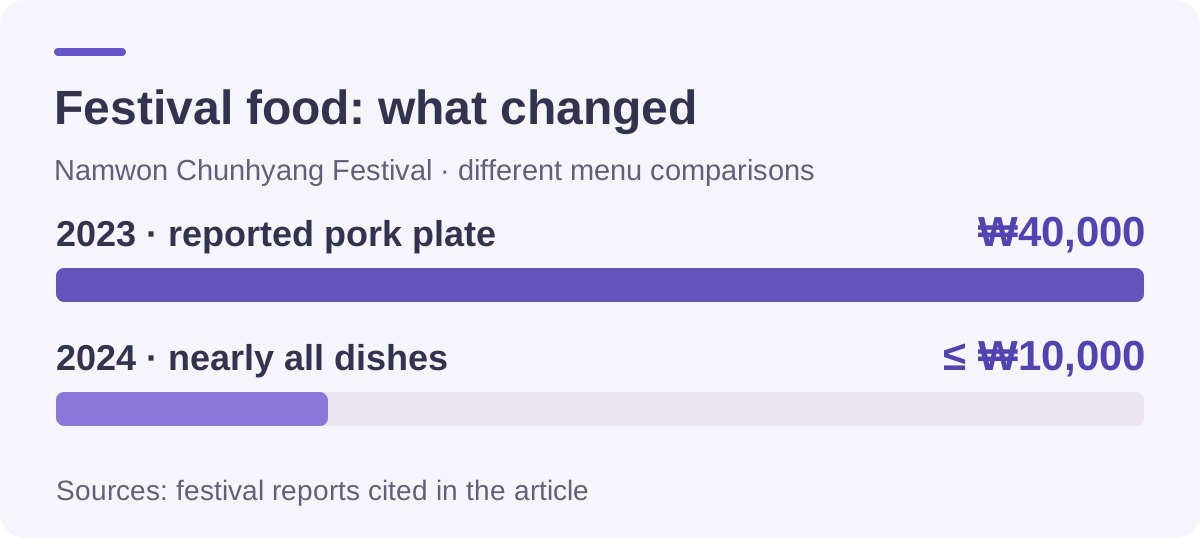
"Ten-odd pieces of pork for ₩40,000."
- Barbecue plate: ₩40,000
- Roughly ten pieces of meat
- Festival labelled a "rip-off" nationally
What it turns on: the missing portion size. A price without a weight lets a stall shrink the plate without changing the board.
"We ordered chicken skewers, a radish-green pancake and makgeolli, and it came to ₩10,000."
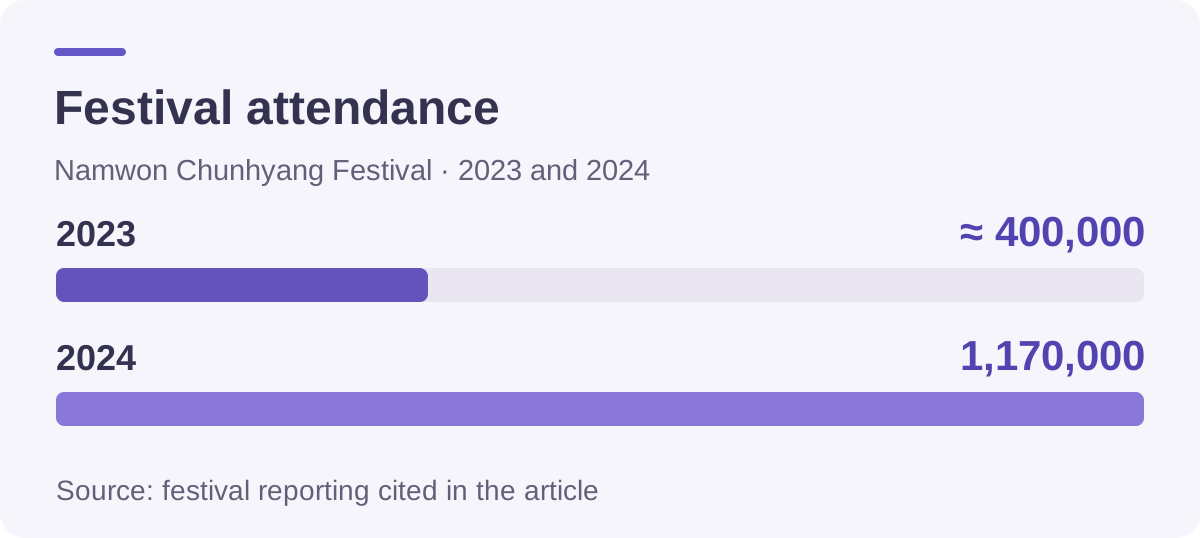
- 126 booths, no stall fee charged
- Every dish labelled with price and weight
- Nearly all dishes ₩10,000 or less
What it turns on: the stall fee. When the city stopped charging vendors for space, it could require fixed, labelled prices in return.
What festivals are doing in 2026
The Global Festa Check-In campaign
In July 2026 Korea's culture and interior ministries and the Korea Tourism Organization launched a campaign at the Boryeong Mud Festival, then carried it to other designated global festivals including the Andong Mask Dance Festival, the Jinju Namgang Lantern Festival and the Suwon Hwaseong Cultural Festival. It has three goals: fair prices, hospitality for foreign visitors and local experiences. In practice that means food information published in advance and checked against what stalls actually sell.
바가지 (bagaji) is the Korean word for overcharging, and festivals now advertise themselves as "bagaji-free" because visitors search for it. The change is driven as much by local reputation as by rules: a single viral video can cost a festival a year of visitors.
How to eat well at any festival
- Check the menu online firstLarge festivals increasingly publish food menus and prices on their websites. Save a screenshot.
- Read the label, not just the priceLook for grams or piece counts. If a stall shows neither, ask before ordering.
- Photograph the boardIt takes two seconds and settles any disagreement.
- Find the complaint desk on arrivalFestival maps usually mark an information or complaint booth.
- Pay by card where you canA card record shows exactly what you were charged, which a cash payment cannot.
Where surprises come from
- No price board, "ask inside"
- Price per portion with no portion size
- "Set only" when single items are listed
- Cash only at a festival that advertises card payment
What fair stalls look like
- Price and weight on the board
- Same menu as the festival website
- Receipt or card payment available
- Festival staff visible nearby
The festivals are worth it
Korean festivals are among the best ways to see the country outside Seoul: lantern-lit rivers in Jinju, mask dances in Andong, mud in Boryeong and costume parades through old towns. The pricing problems were real, and they are increasingly the exception.
The bottom line
Korea is a safe and welcoming place to go to a festival, and most stalls price honestly. Namwon showed that a festival can go from symbol of overcharging to model of fair pricing in a single year. A labelled price and a quick photo are all a visitor needs to enjoy the food without a surprise.
If a stall charged you more than its board, tell the festival desk and post the photo publicly. Festivals now watch their reviews closely, and your account is part of what keeps the next year honest.
Sources
Sources
- Segye Ilbo — Namwon Chunhyang Festival food prices, 2023 vs 2024
- Jeonbuk Ilbo — 1.17 million visitors, 126 booths with no stall fee, labelled prices
- SBS Biz — 2026 Global Festa Check-In campaign launched (July 2026)
- Newsis — fair price, hospitality and local experience; advance food information checked on site
Frequently asked questions
Are Korean festival food stalls overpriced?
Some have been, which is why the government now runs a fair-price campaign at its designated global festivals. Many festivals publish menus and prices in advance, require price and portion labels at stalls, and run complaint desks during the event.
What happened at the Namwon Chunhyang Festival?
In 2023 the festival was criticised after a plate of about ten pieces of barbecued pork sold for ₩40,000. In 2024 the city waived stall fees for 126 booths, worked with a restaurant consultant on menus, and required every dish to carry a price and weight label, with nearly all dishes at ₩10,000 or less. Visitors rose from about 400,000 to 1.17 million.
What is the Global Festa Check-In campaign in Korea?
It is a 2026 campaign by Korea's culture and interior ministries and the Korea Tourism Organization. Starting at the Boryeong Mud Festival in July 2026, it checks food prices against information published in advance, improves facilities for foreign visitors and runs a stamp tour across designated global festivals.
How do I complain about festival food prices in Korea?
Use the festival's on-site complaint or information desk, which most large festivals now run, and photograph the price board and what you were served. You can also call the 1330 Korea Travel Hotline for interpretation and to file a tourist complaint.
Read real traveler experiences
MyKoreaReview collects first-hand accounts from international travelers in Korea — the good and the difficult.
Browse experiences